
DFORCE
DFORCE is a comprehensive, AI‑powered, next‑generation law enforcement platform designed to help public safety agencies digitalize, manage, and optimize all aspects of security operations. It replaces manual, paper‑based, and disconnected systems with a unified, intelligent, highly secure ecosystem. It supports multiple agencies police, investigation units, forensic labs, rehabilitation centers, licensing authorities, and more through stand‑alone modules that can operate independently or as one integrated platform.



Record Management System (RMS)
The Records Management System (RMS) is a centralized and secure platform designed to manage all law-enforcement records efficiently. It enables officers and authorized personnel to record, track, and retrieve operational data.
Key Features
- Manages investigative, arrest, custody, suspect, and Interpol records within a single, secure system.
- Supports dynamic indices for people, vehicles, and items, with automated processes to streamline record handling.
- Enables quick and accurate access to records with real-time alerts and strict role-based access control.
- Built on a high-performance, scalable microservices architecture to support growing operational demands.
- Visually link cases, suspects, vehicles, and evidence to uncover hidden connections.
- Auto generate chronological views of incidents and investigative actions.
- Identifies recurring patterns across multiple cases using analytics.
- Full audit trail for evidence handling to ensure legal compliance.
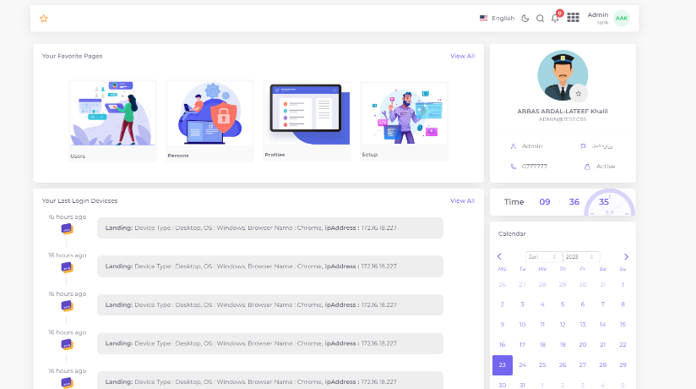
Jail Management System (JMS)
The Jail Management System (JMS) is a centralized platform designed to manage the complete inmate lifecycle securely and efficiently. It enables correctional and public safety agencies to maintain accurate inmate records.
Key Features
- Maintains structured and secure inmate profiles with complete personal, legal, and custody information.
- Accurately tracks inmate movements, transfers between facilities, and release processes in real time.
- Manages cells, buildings, assignments, roles, and inmate personal belongings with full traceability.
- Stores and maintains medical information and synchronizes court-related and legal records.
- Monitors inmate behavior, visitation history, complaints, and participation in rehabilitation programs.
- Supports fingerprint, facial recognition, and biometric verification for secure inmate identification.
- Digitizes intake, classification, and admission processes with automated record creation.
- Auto classifies inmates based on risk level, behavior history, and legal status.
Evidence & Crime Scene Investigation (CSI)
The Evidence & Crime Scene Investigation (CSI) module enables law-enforcement teams to manage crime scenes efficiently and systematically. It centralizes crime-scene operations by organizing evidence, coordinating inspection teams, and maintaining accurate, traceable documentation.
Key Features
- Supports all units involved in crime-scene operations through structured, role-based workflows.
- Assigns investigation teams, tools, vehicles, and risk assessments for each scene visit.
- Organizes crime-scene files with digital diagrams, photos, and structured reports.
- Tracks evidence and equipment with full inventory control and auditable chain-of-custody records.
- Generates clear statistics on cases, evidence handling, and investigator performance.
- Manages forensic processes such as fingerprint analysis, DNA testing, ballistics, and digital forensics with structured case linkage.
- Integrates with internal and external forensic laboratories to submit evidence, track analysis status, and receive results digitally.
- Manages physical evidence storage locations, vaults, shelves, and containers with real-time availability tracking.
Licenses – Permits – Certificates System (LPCS)
The Licenses, Permits, and Certificates System (LPCS) digitalize and manages the complete lifecycle of regulatory approvals issued by law-enforcement and government authorities.
Key Features
- Configurable workflows with customizable steps, approvals, and business rules.
- Supports individuals, establishments, and backend officers through web portals and internal systems.
- Manages issuance, renewal, modification, suspension, and cancellation of licenses and permits.
- Supports major license and permit types, including weapons, explosives, vehicles, sites, and restricted-area access.
- Integrates with the Criminal Records System, provides SMS notifications, and delivers real-time dashboards with reports and KPIs.
- Integrates biometric authentication (fingerprint, facial recognition) to verify applicants and prevent identity fraud.
- Integrates with police, courts, municipal systems, and national registries for validation and data exchange.
- Provides real-time insights into application volumes, approval timelines, compliance rates, and operational KPIs.
Forensic Lab Management System (FLMS)
The Forensic Lab Management System (FLMS) supports forensic laboratories by managing the complete examination lifecycle of physical and digital evidence.
Key Features
- Manages forensic samples through standardized, ISO-compliant workflows with full chain-of-custody tracking.
- Validates laboratory equipment and integrates directly with forensic devices to capture examination data.
- Controls sample movement, examination requests, prioritization, and assignment across lab units.
- Delivers accurate results supported by multi-level review processes and complete audit logs.
- Provides real-time dashboards and tracks inventory for samples, consumables, and laboratory equipment.
- Handles digital evidence from computers, mobile devices, networks, and storage media with proper chain-of-custody.
- Generates court-ready forensic reports, expert summaries, and exhibits, with secure sharing for legal proceedings.
- Multi-level review, cross-checking, and validation of results to ensure accuracy and compliance with ISO standards.
Public Service System (PSS)
The Public Service System (PSS) connects law-enforcement agencies with the public through a unified digital channel. It enables individuals and businesses to submit requests, reports, complaints, and inquiries online.
Key Features
- Allows citizens and businesses to submit requests, reports, complaints, and inquiries online easily and securely.
- Provides authorities with tools to manage, assign, and track incoming cases for faster response and resolution.
- Protects sensitive data by ensuring secure, controlled access for internal teams and stakeholders.
- Sends automated notifications to users and internal teams on case status, approvals, and deadlines.
- Maintains detailed logs and secure document storage for accountability, compliance, and traceability.
- Monitors performance, case resolution times, and trends to improve decision-making and service quality.
- Automated case routing uses rules and AI to route requests to the appropriate department or officer.
- SLA and escalation management to tracks service level agreements and automatically escalates overdue cases.
Use Cases






Business Value
Better Collaboration

Enables instant data sharing between agencies, improving communication and overall awareness.
Higher Efficiency
Automates manual tasks, reduces errors, and allows officers to focus on essential duties.
AI Insights
Uses analytics to detect risks, predict crime patterns, and support proactive decisions.
Digital Operations
Streamlines workflows, cuts data duplication, and provides real‑time alerts and dashboards for faster responses.